Bring Imagination to Life: Themed Playground Markings That Inspire Storytelling
Updated on: November 24, 2025
A playground can be so much more than a space to run around, it can be a stage for adventure, imagination, and creativity. For children in EYFS and KS1, storytelling play helps build confidence, language skills and social awareness. The right playground markings can transform your outdoor area into a world of characters, places and stories that spark daily creativity.
Why Storytelling Markings Matter
Storytelling play is a cornerstone of early years development. When children create stories as they play, they’re practising communication, problem-solving and empathy. Themed playground markings give them the visual cues they need to bring those stories to life, from navigating a jungle to blasting off into space.
The best part? You can use themed markings to guide play naturally without needing constant adult direction. Each design becomes a prompt for new adventures every day.
1. Create Adventure Settings with Themed Trails
If your outdoor space is ready for exploration, a themed trail can set the scene.
- The Jurassic Trail lets children imagine stepping back in time, hopping past fossils and escaping friendly dinosaurs.
- The Safari Trail invites little explorers to dodge crocodiles, stomp like elephants and sprint like cheetahs.
- The Under the Sea Trail transforms your tarmac into an ocean floor where children can side-step like crabs and skip across starfish.
- The Space Trail is perfect for future astronauts, helping them weave through planets and rocket their way across the playground.


These themed environments naturally inspire storytelling. Try linking them to weekly classroom topics – for example, “Our World” or “Dinosaurs and Discovery” – and watch pupils build whole narratives during outdoor play.
2. Encourage Character Play Through Imaginative Designs
Children love taking on roles, and markings with character-led themes make this easy. The Mr Wolf game brings a classic playground story to life, giving children a structured setting to act out familiar roles and practise sequencing events.
- The Snake Phonics marking can become a friendly creature who helps pupils “sound out” their way through a jungle adventure.
- The Phonics Train allows children to imagine journeys where each carriage reveals a new sound – perfect for integrating literacy into playtime.

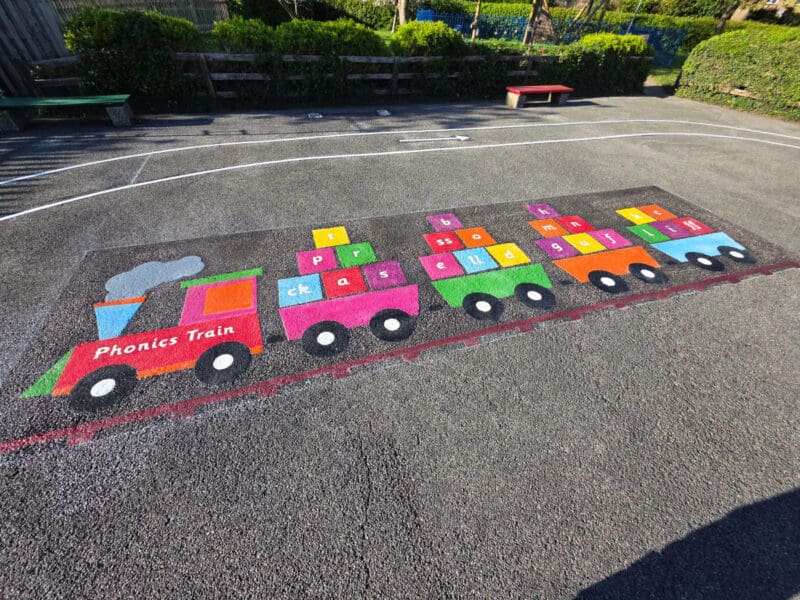
To keep play fresh, rotate a “story of the week” using these markings. One week they might be animal adventurers; the next, astronauts sending phonics codes back to Earth.
3. Build Story Paths with Letter and Number Markings
Storytelling isn’t limited to make-believe, it also supports literacy and numeracy. Incorporating letter and number markings gives children a way to weave learning into their stories.
For example:
- The Caterpillar A–Z Lowercase marking can become a trail of clues where each letter unlocks part of a story.
- The Alphabet Jump encourages children to “jump through words” as they spell out names or magical spells.
- The Snail 1–10 creates a story path for counting adventures — perhaps a snail racing to deliver messages through a fairy garden.


These markings subtly combine movement with learning, making phonics and numbers feel like part of the story rather than a lesson.
4. Turn Learning Themes into Story Adventures
You can also use educational designs to inspire creative storytelling. For instance:
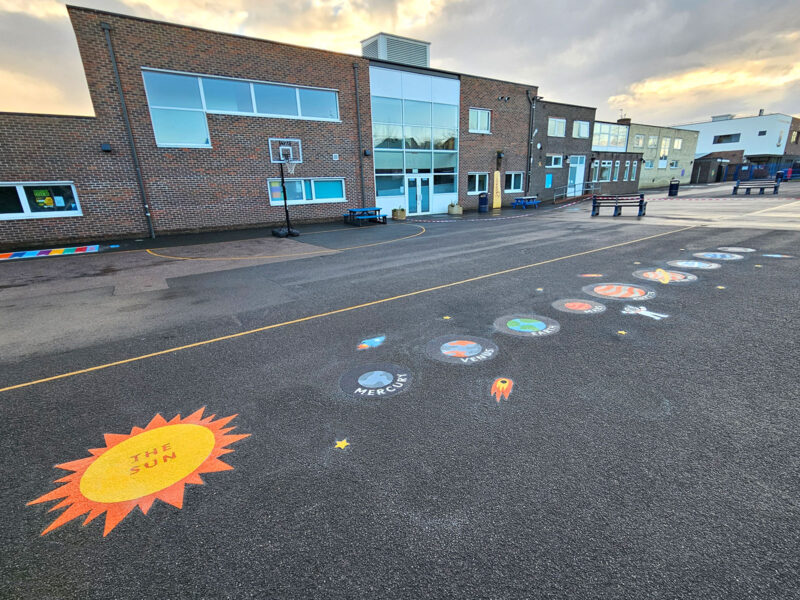
- The Solar System marking transforms science lessons into adventures through space where pupils can “land” on each planet and invent stories about the creatures who live there.
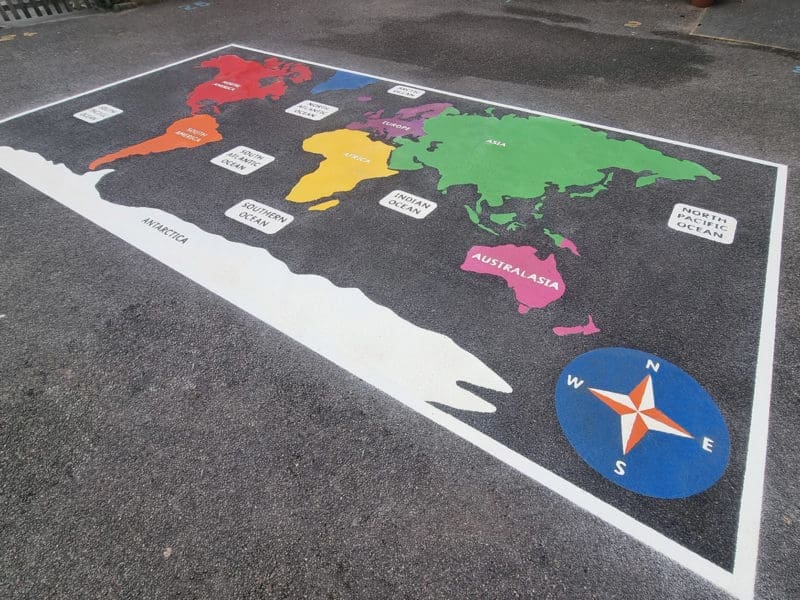
- The World Map with Oceans marking can support geography topics and spark stories of explorers travelling the globe.
- The Seasons design offers a wonderful storytelling prompt. Children can act out scenes from each season or describe how characters adapt to changing weather.
Teachers can use these markings as outdoor storytelling starters:
“You’ve just landed on Mars — what do you see?”
“The season has changed to winter — how will your animal survive?”
These prompts help children think creatively while linking play to their wider learning.
How to Encourage Storytelling Every Day
- Model storytelling language – use descriptive phrases when joining in with play.
- Link markings to classroom topics – for example, use the Mini Adventure Trail when learning about local wildlife.
- Rotate story starters – display simple outdoor prompt cards beside markings to inspire new tales.
- Celebrate stories – invite children to retell their playground adventures back in class.

Inspire Every Story with Fun & Active Markings
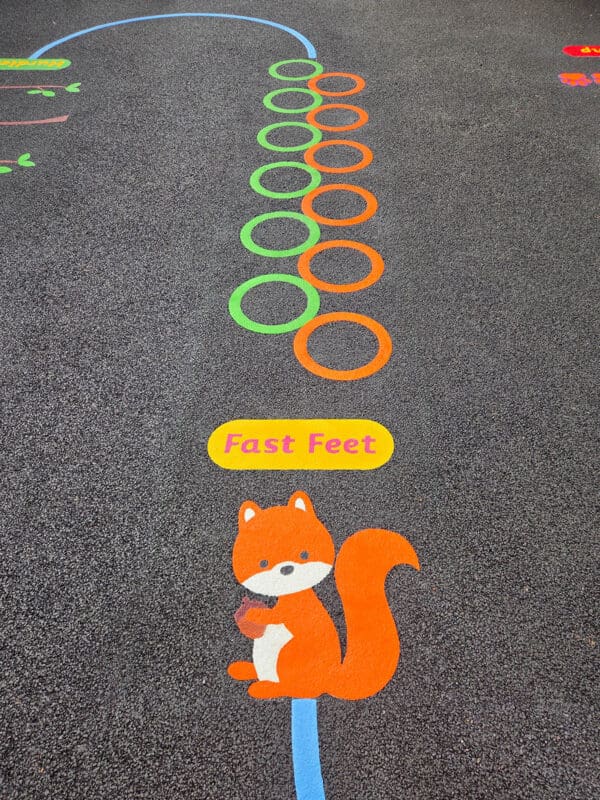
With themed playground markings from Fun & Active Playgrounds, you can create outdoor spaces that support storytelling, literacy and creativity, all through play. From roaring dinosaurs to soaring rockets, every marking offers a new way for children to imagine, act, and learn.
Explore the full range of designs and start building stories under your feet.