Enhancing EYFS Literacy With Playground Markings
Updated on: March 27, 2025
Getting to grips with the alphabet and phonetics in early years is essential for children to master reading, writing and spelling as they grow.
Early Years Foundation Stage (EYFS) education plays a crucial role in shaping young children’s literacy skills. Engaging children in fun and interactive learning experiences can support their love of reading, writing and communication.
One innovative way to support literacy development is through playground markings. These vibrant and educational designs transform outdoor spaces into immersive learning environments, helping children develop essential literacy skills while staying active.
The Importance of Literacy in EYFS
Literacy in the early years is more than just recognising letters and sounds; it involves communication, storytelling, listening, and comprehension. Developing these skills at a young age lays the foundation for academic success and lifelong learning. Traditional classroom settings can sometimes limit opportunities for active learning, which is why incorporating literacy-rich environments in outdoor play areas is so beneficial.
At Fun & Active Playgrounds, we believe all children should enjoy learning. Many studies, such as those by Hagenauer and Hascher or research by The University of Bristol, highlight the difference enjoyment can have on a child’s educational outcomes.
Dr Tim Morris, lead author of the University of Bristol study, reports that ‘school enjoyment as early as the age of 6 is strongly linked’ to successful ‘GCSEs 10 years later’.


How Playground Markings Support Literacy Development
Playground markings offer a dynamic approach to early literacy learning, allowing children to engage with letters, words, and stories in a playful and physical way. Here’s how they help:
1. Letter and Word Recognition
Alphabet markings, phonics trails, and word games on the playground surface encourage children to explore letters and sounds in a fun setting. By hopping, skipping, or running along these markings, children strengthen their familiarity with letters, reinforcing classroom learning through movement and play.
2. Storytelling and Role-Playing
Imaginative play is a key component of EYFS literacy development. Themed playground markings, such as story paths or fairy-tale-inspired designs, create opportunities for children to invent stories, develop narratives, and practice verbal communication with their peers.
3. Phonics and Rhyming Games
Phonics-based markings help children practise blending sounds and recognising word patterns. Interactive rhyming hopscotch or phoneme trails can make phonics learning more engaging and memorable, supporting early reading development.
4. Encouraging Writing and Mark-Making
Chalk-friendly playground markings provide a designated space for children to practise mark-making, an important precursor to writing. Whether tracing letters, drawing pictures, or writing simple words, these activities help refine motor skills and build writing confidence.

Fun Ways To Teach Literacy
Teaching the alphabet:
Understanding that the letters of the alphabet occur in a particular order is a skill in itself. A good grasp of alphabetical order is something children will use throughout their education and in their daily life as an adult.
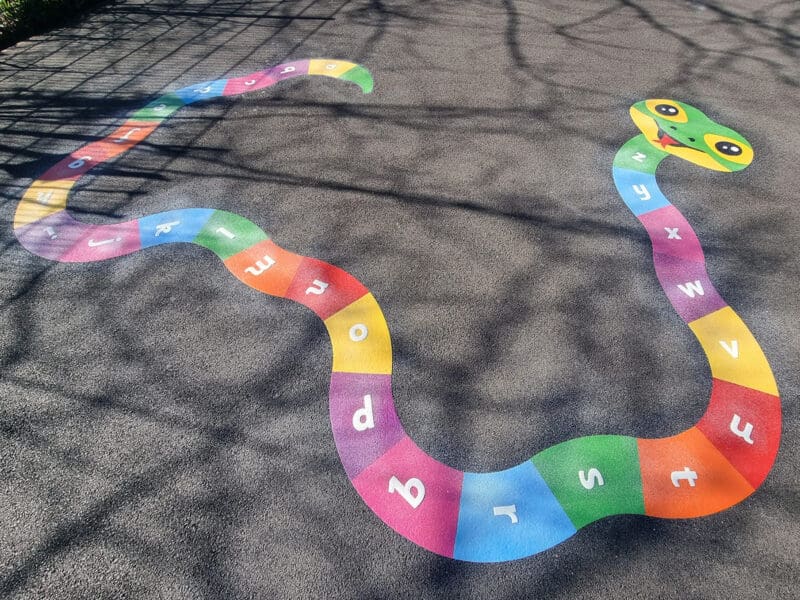
The Caterpillar and Snake A-Z Playground Marking is a fun way for children to regularly practice both individual letter and sound recognition and the order of the alphabet. Their friendly faces and brightly-coloured bodies will motivate children to travel up and down each letter, sounding them as they go.

Learning phonics:
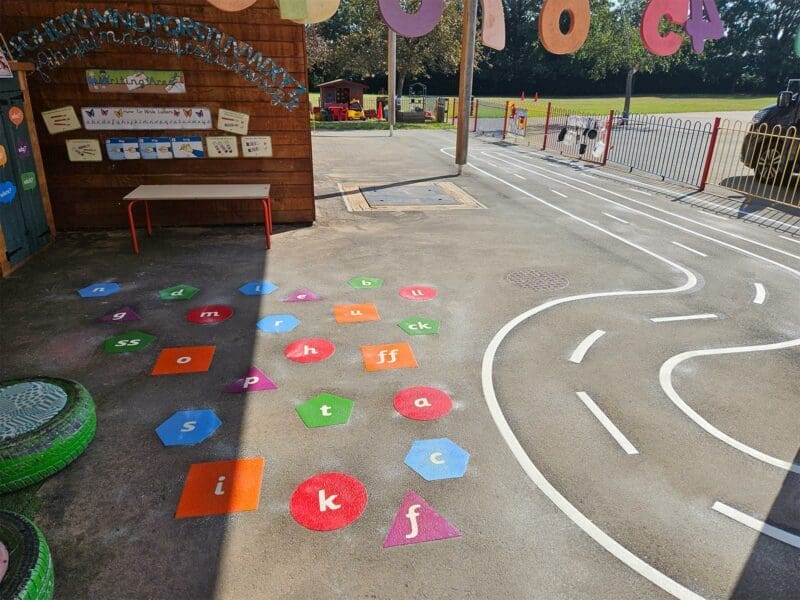
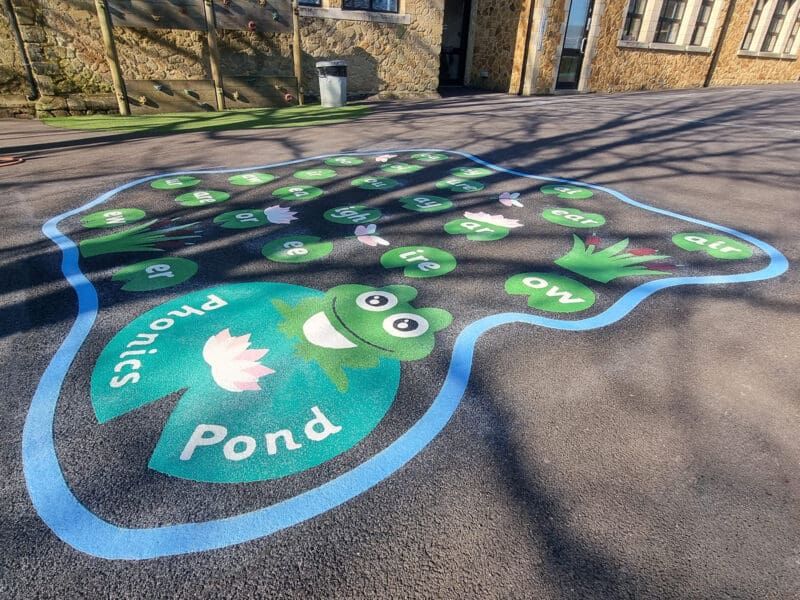
Our Phonics Playground Markings are an excellent tool for teaching early literacy skills in an engaging and active way. This vibrant and educational marking encourages children to explore letter sounds, phonemes, and word formation through movement-based activities.
Teachers can use it for interactive phonics lessons, where children hop, step, or run to different letters and blend sounds to create words. The marking supports synthetic phonics learning, helping children recognise letter-sound relationships while reinforcing their reading and spelling skills.
By incorporating physical activity, the Phonics Playground Marking makes literacy learning more enjoyable, improving retention and confidence in young learners.

Learning To Construct Words:
Whilst it’s important for children to regularly practice letter-sound recognition, it’s also vital they have time to explore how to combine letters to construct and decode words.
The Alphabet Jump Playground Marking’s jumbled and colourful letters are a great way to promote discovery learning. Children will enjoy jumping across the letters and challenging themselves and others to make words as they go.


With our letter playground markings permanently installed on your playground, there’s plenty of time for both children and staff to enjoy lots of fun alphabet learning in the fresh air.
Playground markings provide an exciting and effective way to enhance EYFS literacy while promoting active play. By integrating educational designs into outdoor spaces, schools and nurseries can create a stimulating learning environment that supports young learners in their literacy journey. Encouraging children to engage with letters, words, and storytelling through movement helps build a strong foundation for reading and writing, all while making learning fun!
Would you like to explore how playground markings can enhance literacy at your school? Get in touch with Fun & Active Playgrounds today and let’s create a space where learning and play go hand in hand!