How Balance Equipment Builds Confidence in Young Children
Updated on: September 9, 2026
Balance is one of the most important physical skills young children develop, but it often goes unnoticed.
From learning to walk along a narrow beam to confidently climbing over stepping blocks, balance forms the foundation for almost every physical activity a child will experience. It supports coordination, builds confidence and helps children develop the strength and stability they need for everyday movement.
That’s why balance equipment is such an important part of any EYFS or KS1 playground.
Whether it’s a simple set of stepping blocks or a challenging trim trail, the right equipment encourages children to test their abilities, overcome obstacles and celebrate their own achievements, all through play.
Why Balance Matters in Early Childhood
Balance is one of the fundamental movement skills identified in the Early Years Foundation Stage (EYFS). Alongside coordination, agility and strength, it plays a key role in children’s physical development.
As children improve their balance, they also develop:
- Core strength
- Coordination
- Gross motor skills
- Spatial awareness
- Body control
- Confidence
- Concentration
These skills don’t just benefit children in the playground; they support activities in the classroom, PE lessons and everyday life.
Building Confidence Through Play
Young children naturally enjoy challenging themselves.
One day they carefully place one foot in front of the other on a balance beam. A few weeks later, they’re confidently crossing without hesitation.
These small moments of success have a big impact.

Every completed challenge helps children to:
- Build self-confidence
- Develop resilience
- Learn through trial and error
- Take safe, managed risks
- Celebrate personal achievement
Unlike competitive games, balance equipment allows children to progress at their own pace, making it particularly valuable for younger pupils who are still developing physically.
Stepping Blocks & Beams: Small Challenges, Big Achievements
Stepping blocks and balance beams may seem like simple additions to a playground, but they provide some of the most valuable opportunities for children to develop confidence, coordination and control.
As children move from one block to the next or carefully make their way along a beam, they’re constantly judging distances, adjusting their balance and learning how to control their movements. Every successful crossing builds confidence, encouraging them to take on new challenges and gradually push themselves a little further.
Because the equipment is freestanding and moveable, schools also have the flexibility to change the layout whenever they choose. Rearranging the blocks and beams creates new routes and challenges, keeping play fresh and encouraging children to think differently about how they move through the space.
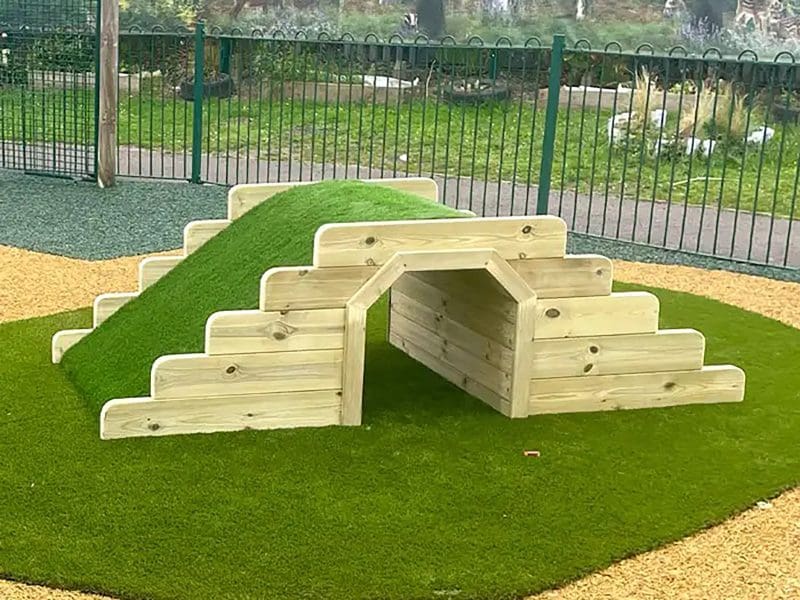 As confidence grows, children naturally begin creating their own games and challenges by:
- Taking bigger steps between blocks
- Walking forwards and backwards along beams
- Balancing with their arms outstretched
- Completing the course more quickly
- Creating obstacle routes with friends
- Challenging each other to try different paths
These open-ended play opportunities mean there’s no single ‘right’ way to use the equipment. Children can progress at their own pace, returning again and again to test their balance and celebrate their own achievements.
Stepping blocks and beams are also an excellent choice for schools with limited outdoor space. Their modular, moveable design allows staff to adapt the layout to suit different year groups, playground sizes or activities, making them a versatile investment that grows with the needs of the school.
Wobble Bridges: Adding an Extra Challenge
For children who are ready to take the next step, wobble bridges introduce an exciting new level of movement.
Unlike fixed beams, wobble bridges move slightly underfoot, encouraging children to make constant adjustments to maintain their balance.
This helps develop:
 Core stability
- Coordination
- Agility
- Confidence
- Problem-solving skills
 Core stability
Because the challenge changes with every step, children remain engaged while continually improving their physical abilities.
Balance Trails and Trim Trails
Balance equipment becomes even more effective when it’s part of a larger play journey.
Rather than using individual pieces in isolation, many schools are choosing to install balance elements within trim trails or bespoke balance trails.
 A typical trail might include:
- Stepping blocks
- Balance beams
- Wobble bridges
- Rope crossings
- Climbing elements
- Traversing activities
This creates a varied experience where children move seamlessly from one challenge to the next, keeping them physically active while developing a broad range of movement skills.
Trim trails are especially effective because they cater for different confidence levels. Some children may enjoy completing the entire course, while others can build confidence gradually by mastering one element at a time.
Supporting the EYFS Curriculum
Balance equipment aligns perfectly with the EYFS framework by encouraging active play that supports physical development.
 Children develop confidence through opportunities to:
- Negotiate space safely
- Move with increasing control
- Build strength and coordination
- Develop balance through everyday play
- Practise gross motor skills
Perhaps most importantly, they do all of this while having fun.
Unlike structured PE lessons, playground equipment allows children to revisit challenges repeatedly, reinforcing skills through regular, self-directed play.
Encouraging Social Development Too
Balance equipment isn’t just about physical development.
Children rarely use it alone.

You’ll often see pupils:
- Encouraging each other across a beam
- Waiting patiently for their turn
- Celebrating a friend’s success
- Helping younger children complete a challenge
- Creating imaginative games together
These shared experiences naturally develop communication, cooperation and confidence alongside physical skills.
Choosing the Right Balance Equipment for Your School
When selecting balance equipment, it’s worth thinking about the ages and abilities of the children who will use it.
For younger pupils, simple equipment such as stepping blocks and low-level balance beams provide achievable challenges that build confidence from day one.
For schools looking to create a more adventurous play environment, trim trails offer a combination of balance, climbing and coordination activities that can continue to engage children as they grow.
Many schools choose to combine both approaches; installing standalone balance features alongside larger trim trail structures to create an outdoor space that supports pupils from EYFS through to KS2.
Helping Every Child Take the Next Step
Confidence isn’t built overnight, it develops one small achievement at a time.
Whether it’s balancing across a beam for the first time, stepping confidently between blocks or completing an entire trim trail without assistance, these everyday successes help children become more resilient, independent and physically capable.
At Fun & Active Playgrounds, our range of stepping blocks and beams and trim trails is designed to give children the confidence to explore, challenge themselves and enjoy active play in a safe, engaging environment.
Whether you’re creating an EYFS outdoor area or transforming your whole playground, our team can help you choose equipment that supports children’s physical development while making playtimes more exciting.
Book a free consultation today and discover how balance equipment can help every child build confidence, one step at a time.