How Schools Use Outdoor Spaces to Support Behaviour and Wellbeing
Updated on: May 18, 2026
School leaders everywhere are facing the same challenge: rising behaviour concerns, increasing wellbeing needs, and stretched staff capacity. The good news? One of the most effective tools schools already have is sitting right outside the classroom door.
Outdoor spaces are no longer just for break times. Across the UK, schools are intentionally designing playgrounds and outdoor learning areas to support emotional regulation, reduce behaviour incidents, and improve pupil wellbeing.
This blog explores how and why outdoor environments are becoming a key behaviour and wellbeing strategy.
Why Outdoor Spaces Matter More Than Ever
Over the past few years, schools have seen:
- Increased anxiety and emotional dysregulation in pupils
- More behaviour incidents linked to overstimulation and sedentary classroom time
- Greater expectations from Ofsted around wellbeing, inclusion, and personal development
Outdoor environments provide something classrooms cannot: space, movement, sensory regulation, and informal social learning.
Research consistently shows that time outdoors helps children:
- Reduce stress and cortisol levels
- Improve attention and focus
- Build social skills through play
- Release energy in healthy ways
For schools, this translates into fewer behaviour incidents and calmer classrooms.
From Playground to “Outdoor Provision”
Forward-thinking schools are reframing the playground as an extension of their behaviour and wellbeing provision.
Instead of asking:
“What can children play with at break?”
They’re asking:
“What emotional, social and sensory needs can we support outdoors?”
This shift is transforming how outdoor spaces are designed and used.
Creating Zones That Support Different Needs
One of the most successful approaches is zoning outdoor spaces to support different behaviour and emotional needs.
1. Active Zones: Safe Energy Release
Some behaviour challenges stem from pupils simply needing to move more. Active zones give pupils a structured way to release energy.
Schools are adding: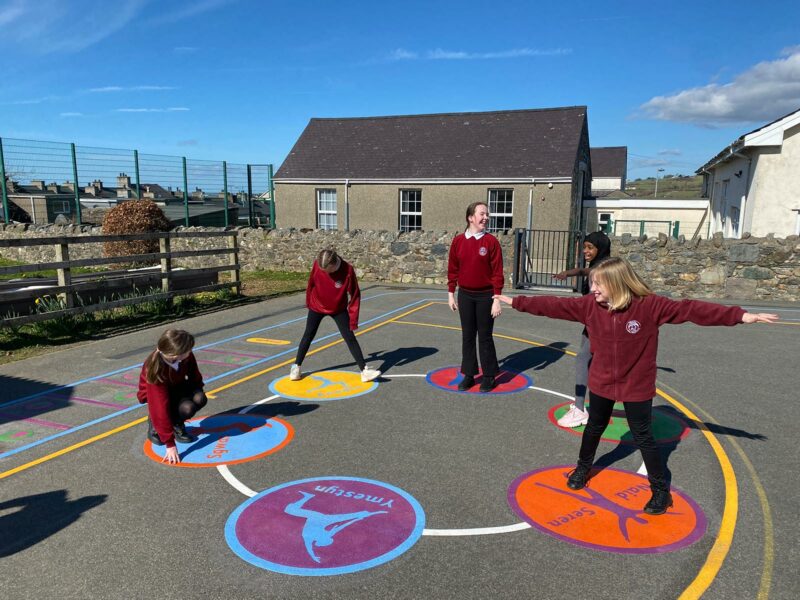
- Running tracks and sports courts
- Fitness trails
- Climbing and movement equipment
- Playground games markings
These spaces help reduce:
- Classroom fidgeting
- Disruptive energy after lunch
- Playground conflict from unstructured play
Many schools report calmer afternoon lessons once pupils have had the chance to move properly at break.
2. Calm Zones: Emotional Regulation & Reset
Not every child thrives in busy playgrounds. For some, break times can feel overwhelming.
Calm zones give pupils somewhere to:
- Regulate emotions
- Take sensory breaks

- Recharge socially and mentally

Popular additions include:
- Sensory play panels
- Outdoor seating and reading areas
- Nature and garden spaces
- Quiet play equipment
Schools often use these spaces as part of:
- Behaviour support plans
- SEN provision
- Emotional regulation strategies
For some pupils, access to a calm outdoor space can prevent incidents before they happen.
3. Social Play Zones: Building Relationships
Many playground disagreements happen when children don’t know what to play.
Structured social play areas give pupils:
- Clear activities
- Shared games
- Opportunities to collaborate

Schools are introducing:
- Outdoor games panels
- Musical play equipment
- Role-play stations
- Collaborative puzzles
These spaces support:
- Turn taking
- Communication skills
- Cooperative play
- Friendship building
The result? Fewer playground disputes and more positive play.
How Outdoor Spaces Reduce Behaviour Incidents
Schools that invest in outdoor provision often notice changes quickly.
Common feedback includes:

Break times become calmer
- Pupils have clear activities and purpose
- Less boredom = fewer arguments
Transitions improve
- Movement helps pupils regulate before lessons
- Children return to class ready to learn
Behaviour support becomes proactive
- Pupils access regulation tools early
- Fewer escalations and exclusions
Outdoor provision shifts behaviour management from reactive to preventative.
Supporting Staff Wellbeing Too
Outdoor spaces don’t just help pupils.
They also:
- Reduce lunchtime incidents staff must manage
- Support midday supervisors with structured play options
- Improve overall school atmosphere
A calmer playground leads to less stress for staff – something every school needs.
Linking Outdoor Spaces to Ofsted & School Priorities
Outdoor wellbeing provision supports multiple school priorities:
- Personal development
- Behaviour and attitudes
- Inclusion and SEND
- Physical activity and health
- Attendance and engagement
 Personal development
For leadership teams, outdoor investment isn’t just a “nice to have”. It directly supports inspection frameworks and whole-school improvement plans.
A Strategic Opportunity for Schools
Outdoor spaces are one of the most cost-effective behaviour and wellbeing interventions schools can make.
They:
- Support hundreds of pupils every day
- Last for years with minimal maintenance
- Align with funding streams like Sports Premium
- Improve school culture and pupil experience
And most importantly, they give children what they truly need: space to move, play, regulate and connect.
Sometimes, the Best Behaviour Strategy Starts Outside
Behaviour and wellbeing challenges aren’t going away, but schools don’t have to tackle them indoors alone.
By rethinking playgrounds as part of behaviour and wellbeing provision, schools are creating environments where pupils feel calmer, happier, and more ready to learn.
Get in touch with our team today to start planning a playground that supports every child.