Outdoor Zones: Structure Your Playground for Maximum Engagement
Updated on: October 8, 2025
A well-structured playground can transform your outdoor area into a buzzing hub of activity, learning, and fun. For teachers, a carefully planned layout doesn’t just keep children busy, it supports the curriculum, encourages social skills, and helps with behaviour management. By creating clear outdoor zones, you can make the playground a place where every child finds something to enjoy while still gaining valuable skills.


Why Zoning Matters for Schools
When your outdoor space has defined areas for different activities, children know where to go for active play, quiet time, or creative challenges. This structure helps:
-
Prevent overcrowding in one area.
-
Encourage inclusive play, so every child has a space they feel comfortable in.
-
Support learning outcomes, from literacy to physical development.
-
Make supervision easier by clearly segmenting activities.
Core Playground Zones That Boost Engagement
Here’s how you can break down your playground into purposeful, teacher-friendly zones.
1. Physical Activity Zone
This is where children burn off energy, improve fitness, and develop gross motor skills. For maximum variety, include:
-
Trim trails for agility and balance.
-
Climbing frames or play towers to encourage upper body strength.
-
Markings for games like hopscotch, king square, or an athletics track.
Tip for teachers: Incorporate PE lesson plans into these spaces. A hopscotch grid can become a maths game, while running tracks can be used for timed challenges.


2. Creative Play Zone
A space for imagination, role-play, and storytelling is invaluable. Use:
-
Play panels like shop fronts, pirate ships, or kitchens.
-
Small world play areas for group storytelling.
-
Loose parts play with blocks, crates, or fabric.
Tip for teachers: Turn this into a drama or literacy space where children can act out scenes from books, or create their own scripts for a group performance.


3. Quiet Reflection Zone
Not all children want constant high-energy play. A calm corner gives children space to regulate emotions and recharge. Consider:
-
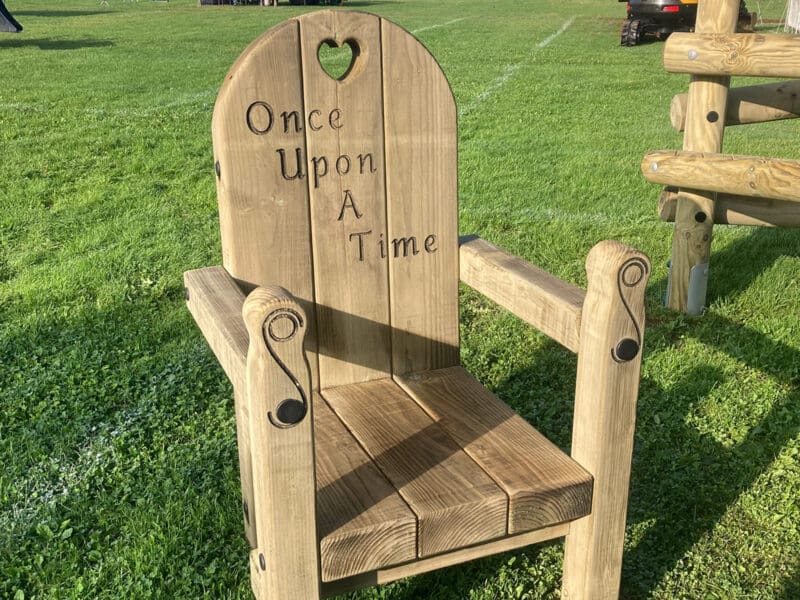
Benches or storytelling chairs to bring children together in a settled environment.
-
Shaded seating areas under canopies or wooden structures.
-
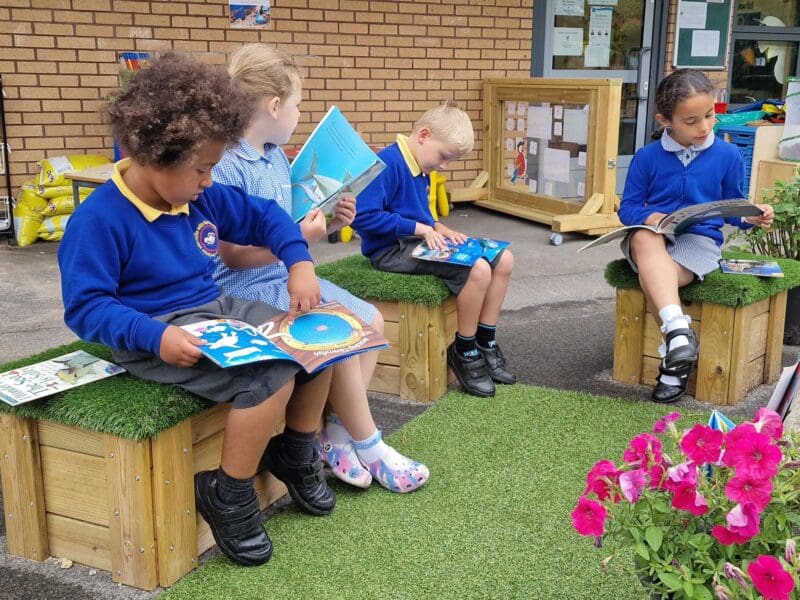
Natural elements like planters, sensory gardens, or artificial grass for a softer feel.
Tip for teachers: Use this as a reading corner during warmer months, or a calm-down area for pupils who need time to self-regulate.
4. Learning Zone
An outdoor classroom can make lessons more engaging. Equip with:
-
Whiteboards or chalkboards.
-
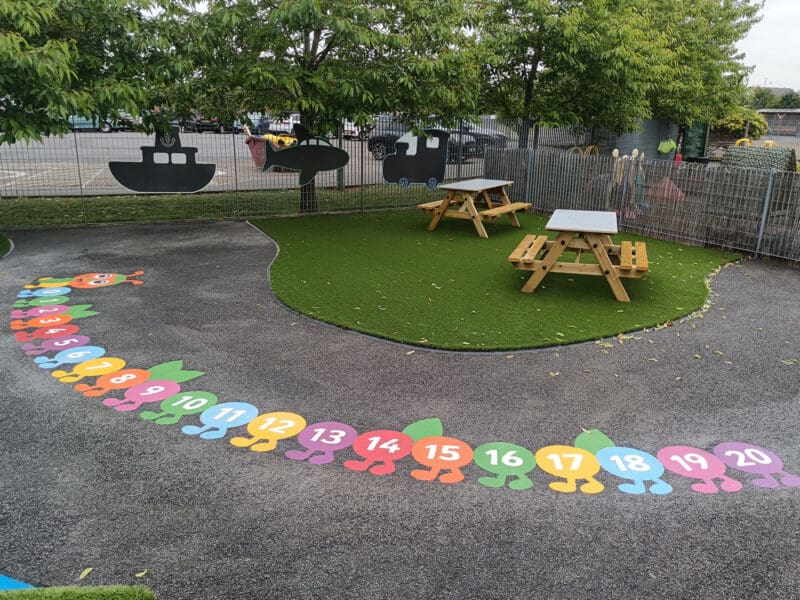
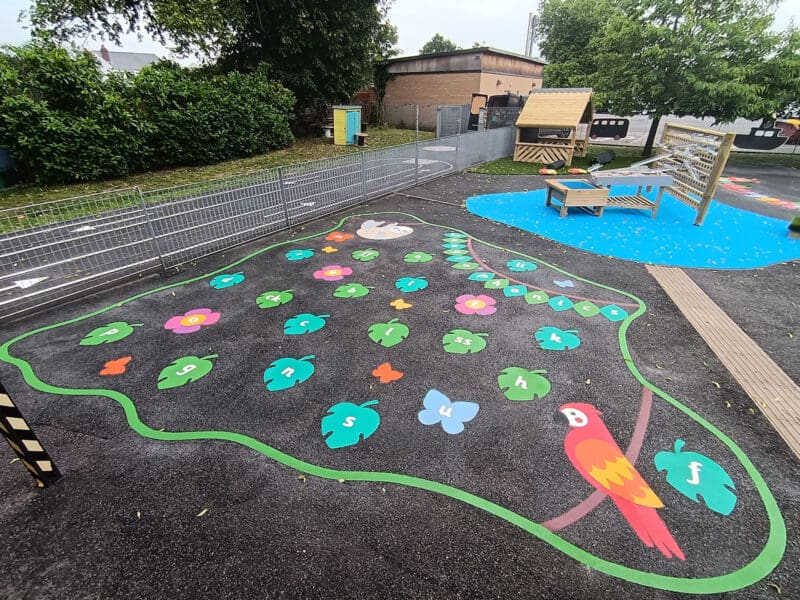
Number, alphabet and phonics playground markings on the ground.
-
Play Panels to add a hands-on learning element to any subject.
Tip for teachers: Combine this zone with nature activities like measuring plant growth, sketching leaves, or tracking weather patterns.
5. Sports & Games Zone
Sports encourage teamwork, resilience, and healthy competition. Mark out:
-
Multi-sport courts with clear line markings.
-
Ball game walls for basketball, cricket, or football skills.
-
Court coatings for slip-resistant, vibrant surfaces.
Tip for teachers: Assign different sports to specific days to keep the variety high and ensure all pupils have a go at different activities.


Making Zones Work Together
To keep things running smoothly:
-
Use signage and markings to clearly identify each zone.
-
Rotate activities to keep children engaged.
-
Create pathways using footprints and coloured dots to give pupils easy access between zones and avoid collisions.
-
Supervise strategically and assign staff to cover more than one zone if they’re located near each other.


Maximising Learning Through Play
Each zone can link directly to the curriculum:
-
Physical zones = PE, health education.
-
Creative zones = literacy, art, drama.
-
Quiet zones = wellbeing, reading, mindfulness.
-
Learning zones = science, maths, language development.
-
Sports zones = teamwork, strategy, co-ordination.
With these connections, outdoor time becomes an extension of the classroom rather than a break from it.


Practical Steps for Teachers
-
Map your playground – identify current spaces and underused areas.
-
List your priorities – are you short on active play equipment, or do you need more quiet areas?
-
Work with pupils – ask what they’d like to see; it gives them ownership.
-
Plan for all seasons – add shaded spots for summer and sheltered spaces for wet days.
-
Involve staff in the layout – so everyone knows how each zone supports learning.
A Well-Zoned Playground Benefits Everyone
When your playground has a clear structure, pupils stay more engaged, behaviour improves, and lessons can spill outdoors without losing focus. You’ll be able to manage large groups more effectively, and every child will find a space that suits their personality and mood.
Start your playground upgrade by booking a free design consultation today.