The Best Playground Equipment for Boosting Gross Motor Skills in EYFS
Updated on: May 18, 2026
Building strong gross motor skills is a huge part of the Early Years Foundation Stage. It goes way beyond just running around. These skills help kids balance, co-ordinate, hold themselves up straight, feel confident, and even get ready for early writing. The problem? Many schools just aren’t sure which playground equipment actually helps develop these skills, instead of just taking up space.
Let’s get right into the best playground equipment for boosting gross motor skills in EYFS, all based on what actually works in real school playgrounds, not just theory.
Why Gross Motor Skills Matter in EYFS
Physical development sits right at the heart of the EYFS framework. Gross motor skills lay the groundwork for everything else: strong core muscles, balance, spatial awareness, confidence to take risks, and yes, all those fine motor skills like holding a pencil or scissors. Outdoor play is the best way to build these skills because it naturally gets kids moving, exploring, and trying new things. The secret isn’t just letting children run wild, it’s having equipment that encourages climbing, balancing, swinging, and using their whole bodies.
1. Climbing Frames & Low-Level Climbing Equipment

Climbing is one of the best things kids can do for their gross motor skills. Whenever they climb, they’re building strength in their arms and legs, improving their grip, making their core stronger, and even working on problem solving. For the youngest children, low-level climbers are perfect – safe enough for everyone, but challenging enough to grow confidence and independence.
Why does climbing equipment work so well? Kids use it without needing adults to constantly encourage them. It builds resilience and self-belief, and it gets them comfortable with moving their bodies in new ways right from the start.
2. Balance Beams & Trim Trails
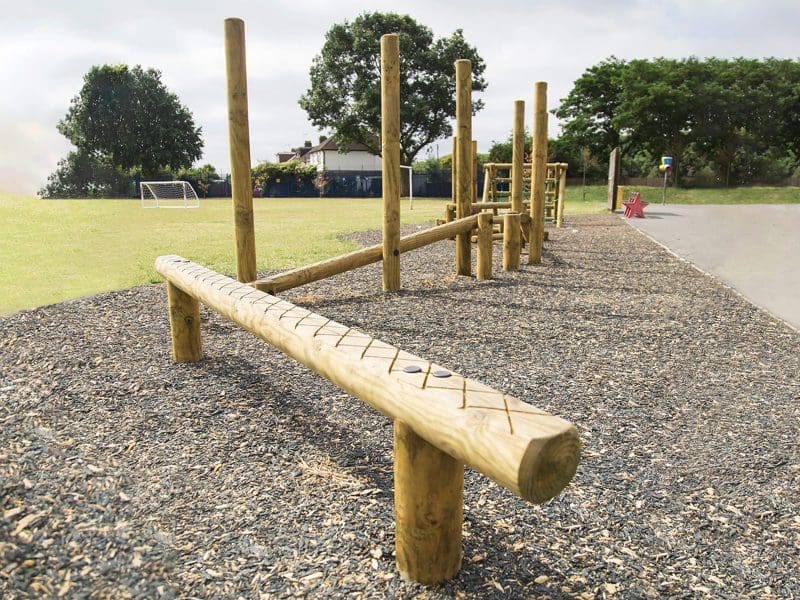
Balance is a big milestone in the early years, and it ties in closely with co-ordination, posture, and even how well kids can concentrate. Balance beams and trim trails help children stabilise their core, improve posture, judge space around them, and move with control. These are especially good for children who need movement to help them focus during the day.
They’re great because all kids can use them, no matter their ability. They encourage practice – kids love to try again and again. Plus, they fit right into warm-ups for PE or daily movement circuits.
3. Stepping Logs & Agility Trails

Jumping and weaving between different surfaces helps children with their balance, timing, co-ordination, and overall confidence. Agility trails let kids make up their own obstacles, so every play session is a bit of a new challenge. They’re perfect for practicing safe jumping and landing, letting imaginations run wild, and putting together little obstacle courses with friends.
4. Musical & Sensory Play Equipment

Gross motor development isn’t just about running and climbing. Musical and sensory equipment, such as chimes or play panels, gets kids using both arms, developing hand-eye co-ordination, and working on rhythm and timing. It’s fantastic for encouraging everyone to join in, especially children with SEND or in mixed-ability groups.
That way, even kids who don’t feel super confident with movement can still practice and develop those skills in a playful setting.
5. Sand & Water Play Stations

Sand and water play push gross motor skills more than you may think. Lifting buckets, pumping water, digging, and carrying things builds upper body strength, co-ordination, and stability. All these movements help kids get ready for writing and hands-on learning inside the classroom.
6. Wheeled Play Zones & Roadway Markings

Trikes, scooters, and other wheeled toys help children develop leg strength, steering skills, spatial awareness, and stamina. These roadways are great for building social skills too, turn-taking, sharing, and learning to play independently. Plus, they let a whole group of kids get active at once, especially during busy break times.
How to Create the Right Mix for Your Playground
The best EYFS playgrounds give kids a mix of different movement challenges every day. Here’s what to include:
– Climbing: Frames and climbing structures
– Balancing: Beams and trim trails
– Jumping: Stepping logs and agility trails
– Pushing and pulling: Sand and water areas
– Co-ordination: Musical and sensory equipment
– Endurance: Roadways for bikes, trikes and cars
When you bring these elements together, kids get a full range of gross motor experiences each day.
The Bottom Line
If you want to support physical development in EYFS, go for playground equipment that encourages daily, active movement of all kinds. Schools that focus on gross motor play see children who are more confident, independent, better behaved, and physically ready to learn.
To get your project underway, book a free virtual playground survey where we will guide you in creating a space tailored to your school.