Unlocking Educational Learning Through Play
Updated on: December 9, 2024
When we send children out to play, it’s easy to forget they’ll be doing so much more than breathing in fresh air and running around.
The relaxed, open-ended environment a play space provides is a rich place for a wide range of learning experiences that can’t be had anywhere else. Free from adult supervision, children develop an array of skills as they engage with their peers and the natural environment. However, free play is not enough if we want all children to have the best playtimes.
In this blog, we will discuss the importance of educational playground markings and how these enhance children’s learning outside of the classroom. We will also discuss the various types of play, their benefits and what playground markings we offer that support these types of play.
The Importance of Educational Playground Markings
Educational playground markings play a vital role in the development of children by providing a wide range of creative, open-ended activities. These markings not only encourage free play, which is essential for encouraging imagination and social skills, but they also support structured and guided aspects of play to ensure that playtime is a fulfilling and progressive experience for everyone.
By incorporating educational elements into playground markings, schools can enhance learning outside the classroom. These markings can help children develop important skills such as maths, literacy, and problem-solving, all whilst enjoying physical activity. The versatility of educational playground markings means they can cater to different age groups and abilities, promoting inclusivity and ensuring that every child benefits from their time on the playground.
Investing in educational playground markings is a strategic way to enrich the school environment, support pupil development, and create a vibrant and engaging space for children to play and learn.
At Fun & Active Playgrounds we use thermoplastic to create our educational playground markings. Thermoplastic is perfect for daily use and can be played on throughout the year. It’s weather-resistant, slip-resistant, fade-resistant and extremely hardwearing so once installed, your educational playground markings will last ten times longer than traditional playground paint.

Free Play vs Guided Play for Playground Markings
Free Play
Free play is unstructured and initiated by the children themselves. It allows them to use their imagination, be creative, make their own rules, and engage in activities that interest them without adult intervention.
Education Scotland defines free play as “what happens when children and young people follow their own ideas and interests.” With children using play to make sense of the world, we must ensure all pupils have valuable play experiences. Education Scotland’s Learning through Play blog also states how progressive play experiences enable children to “develop problem-solving skills, imagination and creativity, language and observation skills, and memory and concentration.”
At Fun & Active Playgrounds, we believe it’s important that all children experience the benefits of free play, so we go to great lengths to ensure all our playground markings are open-ended, allow for creativity and imagination and most of all, are fun and exciting.
Our collection of Trail Playground Markings are a perfect opportunity for children to develop and enhance their free-play skills. We have a range of different themed adventure trails to choose from, including Under the Sea, Safari, Adventure and Space, that will spark children’s imaginations as well as get their little legs moving.
Trail playground markings work brilliantly in terms of providing primary school children with fun playground games. Children can play on our trail playground markings without any adult intervention, interact with their peers and be creative with how they navigate them.
Although there are numerous benefits of free play, the quality of learning children get from this type of play can vary from child to child because it’s affected by past personal experiences, skillset, personality traits and the provided play environment.


Guided Play
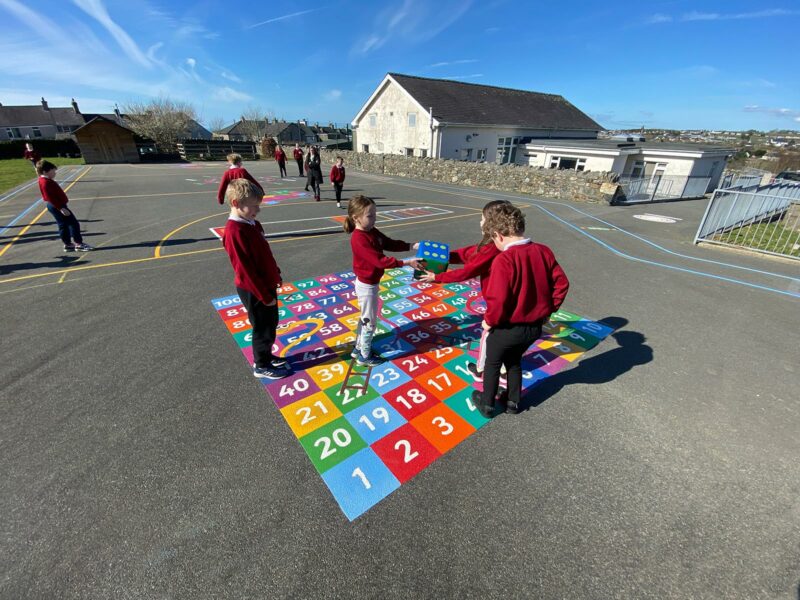
Guided play involves a more structured approach; where an adult provides some direction or sets certain goals and tasks, whilst still allowing children to explore and learn through play. Guided play ensures that all children, including those with different abilities, can participate and benefit from the task. This type of play can also allow adults to introduce specific learning goals or skills, such as counting, spelling or teamwork, using playground markings as tools.
The Encyclopaedia On Early Childhood Development states that although “children find play enjoyable”, “research suggests they should also be provided with a more structured instructional environment in order to allow them to learn.”
According to research conducted by Weisberg et al. for the American Psychological Association, “guided play takes advantage of children’s natural abilities to learn through play by allowing them to express their autonomy within a prepared environment and with adult scaffolding.”
Our 1-10 Multiplication grid is a great playground marking for guided play. It allows children to develop their times table skills in a kinesthetic and visual learning style. Numerous lesson plans can be created around the use of these fun and colourful timetable grids, supporting the benefits of guided play that children will find appealing.
By offering both free and guided play opportunities, playgrounds can become versatile environments that cater to a wide range of developmental needs and preferences, ensuring that all children benefit from engaging, educational, and enjoyable play experiences.


Types of Play
For our children to experience valuable learning during play, there are numerous different types of play we want them to explore.
By understanding and incorporating the different types of play through thoughtfully designed playground markings; educators can create an enriched play environment for children of all ages. This approach ensures that children are not only having fun but are also developing essential life skills. Such a comprehensive play experience supports the physical, emotional, and intellectual growth of children, preparing them for future challenges both inside and outside the classroom.
Playgrounds without educational markings tend to be less engaging, leading to less active and imaginative play. This can result in children not fully benefiting from the developmental advantages that come with well-rounded play experiences.
Educational playground markings are essential for promoting various types of play, these markings serve as visual cues that encourage children to engage in specific activities, helping them explore new ways of thinking and interacting with their peers. At Fun & Active Playgrounds we always want to provide your school and pupils with the best learning experiences. Browse our wide range of educational playground markings to get your pupils learning as they play.