The Best Playground Games for Encouraging Social Play
Updated on: August 7, 2026
The school playground is where children learn far more than just how to have fun. It’s where friendships are formed, confidence grows, and essential social skills are developed through play.
While free play has an important role, introducing structured playground games can help children communicate, cooperate and solve problems together. The right playground markings encourage pupils to take turns, follow rules, work as a team and include others, making break times more positive and engaging for everyone.
If you’re looking to encourage social interaction in your school playground, here are some of the best playground games to consider.
Why Social Play Matters
Social play is an essential part of child development. Through games and shared activities, children learn how to:
- Communicate effectively
- Take turns and share
- Work together towards a common goal
- Solve disagreements respectfully
- Build confidence
- Develop empathy
- Form positive friendships
These skills don’t just benefit children during playtime, they support learning in the classroom and contribute to their overall wellbeing.
A thoughtfully designed playground can naturally create opportunities for these interactions every day.
1. Snakes & Ladders
One of the most recognisable playground games, Snakes & Ladders encourages children to play together while developing patience and resilience.
Children must:
- Take turns
- Follow simple rules
- Celebrate each other’s successes
- Cope with setbacks when sliding down a snake
- Encourage classmates throughout the game
Larger versions allow several children to play together, making it ideal for encouraging inclusive group play.
Great for:

- Cooperation
- Turn-taking
- Communication
- Emotional resilience
With a variety of designs and sizes available, from Snakes and Ladders 1-36 to Deluxe Snakes and Ladders 1-100, there’s an option for every school.
2. Mirror Me
Mirror Me is a fantastic activity for developing communication without relying solely on words.

One child leads while another copies their movements, encouraging pupils to:
- Observe carefully
- Listen to instructions
- Work together
- Develop trust
- Build confidence
The game naturally encourages children to cooperate while being active, making it especially popular with younger pupils.
Great for:
- Communication

- Observation
- Teamwork
- Confidence

Schools can choose between the standard Mirror Me 3 or 5 Stations, or opt for a bolder design with the Deluxe Mirror Me 3 or 5 Stations.
3. Dance With Me
Dance With Me combines movement, creativity and collaboration.
Children work together by copying dance moves, inventing new routines and encouraging one another to join in.
Unlike competitive games, there’s no single winner. Everyone participates together, making it particularly effective for pupils who may be less confident joining traditional playground games.
Teachers also love using Dance With Me during PE lessons or active learning sessions.
 Great for:
- Creativity
- Cooperation
- Confidence
- Physical activity
As with the Mirror Me, we offer a standard Dance With Me 3 or 5 Stations, as well as a Deluxe Dance With Me 3 or 5 Stations.
4. Chess
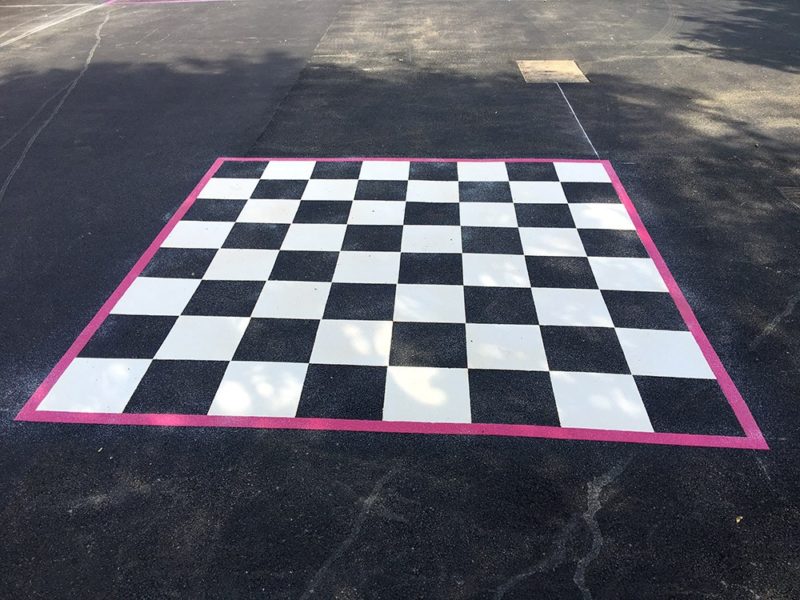
Chess may not be the first game that comes to mind when thinking about active playgrounds, but oversized playground chess boards encourage meaningful social interaction.

Children learn to:
- Communicate respectfully
- Think strategically
- Solve problems together
- Demonstrate patience
- Learn from one another
It’s also common to see older pupils mentoring younger children, helping them understand the rules and develop their confidence.
Great for:
- Problem solving
- Patience
- Strategic thinking
- Peer mentoring
5. Twister
Twister is energetic, unpredictable and guaranteed to get children laughing together.
Players must communicate clearly as they navigate different coloured circles while maintaining their balance.
The game encourages:
- Teamwork
- Positive encouragement
- Cooperation
- Shared laughter

It’s an excellent example of how physical activity can strengthen friendships and create memorable playground experiences.
Great for:
- Team building
- Communication
- Balance
- Cooperative play
6. Duck Duck Goose
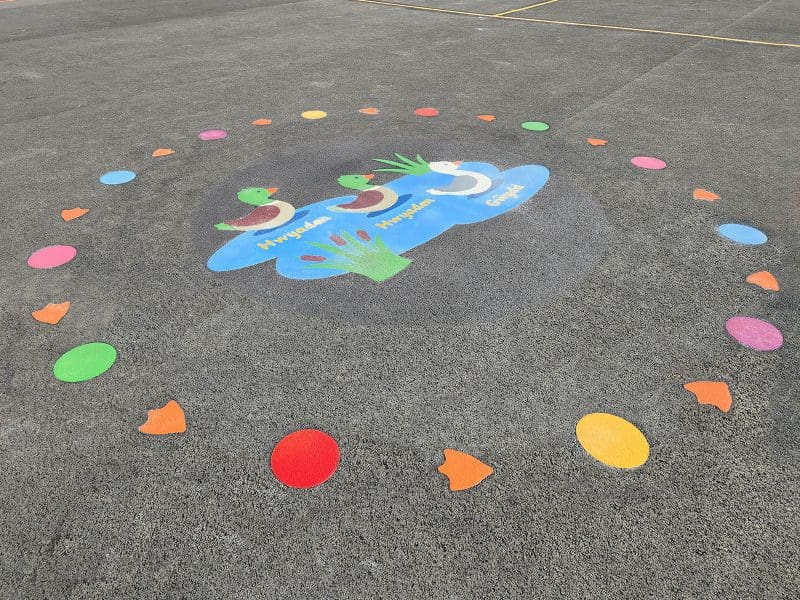
A timeless playground favourite, Duck Duck Goose is perfect for developing social confidence.
Children:
- Take turns leading
- Learn to follow rules
- Encourage participation
- Interact with larger groups
- Build friendships through shared play
 Take turns leading
The simple format means children of different ages can join in together with very little explanation.
Great for:
- Group participation
- Leadership
- Turn-taking
- Inclusive play
Why Structured Playground Games Work
One of the biggest advantages of thermoplastic playground games is that they provide children with clear prompts for play.
Instead of wondering what to do during break time, pupils naturally gravitate towards games that already have simple rules and familiar layouts.
This often results in:
- More active play
- Increased social interaction
- Reduced boredom
- Better use of outdoor space
- More pupils playing together
For schools looking to encourage positive behaviour, structured games can also help reduce conflicts by giving children shared activities to enjoy.
More Than Just Playground Games
While these games are great fun, their real value lies in the life skills they help children develop.
Every conversation, shared laugh, successful team effort and friendly game contributes to children’s communication, confidence and social development.
At Fun & Active Playgrounds, our range of thermoplastic playground games is designed to help schools create vibrant outdoor spaces where children can play, learn and grow together.
Whether you’re looking to refresh an existing playground or completely transform your outdoor environment, our team can help you choose the right games to encourage active, inclusive and social play.
Book a free consultation today and discover how the right playground games can make every break time more engaging.